Your Location Is Fine — Your Phone Just Can't Prove It
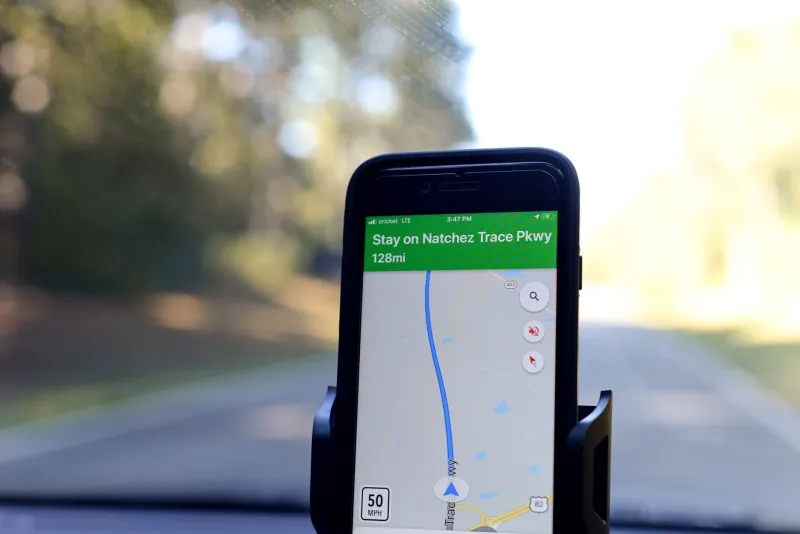
You're sitting on your couch in New Jersey. Your Wi-Fi is on. Your GPS says you're home. And your casino app just locked your account because it thinks you're in Pennsylvania.
Welcome to one of the most frustrating — and least talked about — problems in US online gaming. False-positive geolocation failures are quietly ruining payouts, freezing accounts, and flagging innocent players as fraud risks every single day. The technology designed to keep illegal players out is sometimes doing a lousy job of letting legal ones in.
Here's what's actually going on under the hood, and more importantly, how you fix it without accidentally making things worse.
Why Casino Apps Don't Just Use GPS
Most players assume their phone's GPS is the only thing a casino app checks when verifying their location. It's not even close.
Modern geolocation systems used by sportsbooks and casino platforms layer multiple data sources on top of each other — and when those sources disagree, the app defaults to the most conservative interpretation. That usually means a flag, a lock, or a denied transaction.
Here's what's actually feeding into your location profile every time you open a gaming app:
GPS satellite data is the most accurate signal, but it's also the slowest to refresh indoors and can drift by dozens of feet — or more — in dense urban areas or near large buildings.
Cell tower triangulation is faster but far less precise. If you're near a state border, your phone may be pinging towers on the other side of that line. This is a massive issue in places like the Kansas City metro, the Tri-State area around New York, or anywhere along the Indiana-Illinois border.
IP address geolocation is notoriously imprecise. Your internet provider may route your traffic through a server hub in a different state entirely. A player in rural Connecticut might show an IP registered in Massachusetts. That alone can trip a compliance filter.
Wi-Fi positioning uses nearby router databases to estimate location. If your neighbor's Wi-Fi network is registered to an old address across the state line, that data can bleed into your location fingerprint.
When all four of these signals agree, you're fine. When even two of them conflict, some platforms will boot you out automatically.
The Border Town Problem Nobody's Talking About
If you live within about 50 miles of a state gaming boundary, you're at elevated risk of location conflicts — full stop. Players in metro areas that straddle state lines deal with this constantly.
Think about someone in East St. Louis, Illinois, trying to play on a Missouri-licensed sportsbook. Or a player in Bristol, Virginia, whose cell towers are shared with Bristol, Tennessee. Or anyone in the Philadelphia suburbs who commutes into Jersey and back. The cell network doesn't care about gaming regulations. It just picks the strongest signal.
The result is that these players get flagged at a higher rate than average, even though they're doing absolutely nothing wrong. Some have had payouts delayed for weeks while compliance teams manually reviewed their accounts. Others have been asked to re-verify their identity — again — simply because their location data looked suspicious on a Tuesday afternoon.
What GPS Spoofing Detectors Are Actually Looking For
Casino apps aren't just checking where you are. They're checking whether your location makes sense.
Anti-spoofing systems look for patterns that suggest someone is faking their GPS coordinates — like a location that jumps 30 miles in 90 seconds, or a GPS reading that doesn't match the cell towers your phone is connected to. These are legitimate red flags when someone is actually trying to cheat the system.
The problem is that legitimate anomalies can look identical to spoofing attempts. If you drove from Philadelphia to Atlantic City and opened the app in a parking garage with weak GPS, your location data might show a brief conflict between your last known position and your current one. The algorithm doesn't know you just parked. It knows your coordinates look inconsistent.
VPN usage makes this dramatically worse. Even a VPN that isn't routing your traffic through a blocked location can create IP address conflicts that look suspicious to compliance systems. If your GPS says New Jersey but your IP says Virginia, you're going to have a bad time.
How to Dispute a Location Flag Without Making It Worse
Here's where most players go wrong: they panic and start clicking everything, submitting multiple support tickets, or — worst of all — trying to restart the app in a different location. All of that creates more conflicting data and makes the compliance review harder.
If your account gets flagged for a location issue, do this instead:
Step 1: Stop where you are. Don't move. Don't close the app and reopen it somewhere else. Your goal is to establish a stable, consistent location record right now.
Step 2: Screenshot everything. Take a screenshot of your phone's GPS coordinates (open Google Maps and let it lock your position), your Wi-Fi network name, and the error message or account notice from the casino app. These become your evidence.
Step 3: Contact support through the app, not email. In-app chat support at most major platforms has direct access to your real-time session data. An email submitted hours later doesn't give them the same snapshot of what was happening at the time of the flag.
Step 4: Use precise language. Don't say "I think my location was wrong." Say something like: "My account was flagged at [timestamp]. I was physically located at [city, state]. My GPS coordinates at that time were [coordinates]. I believe the flag may have been triggered by a cell tower conflict or IP routing issue. I'm requesting a manual location review."
Step 5: Ask for a location verification link. Many platforms have a specific re-verification tool that asks you to confirm your location in real time. Requesting this directly, rather than waiting for support to offer it, speeds up the process significantly.
Step 6: If the payout is frozen, escalate in writing. Submit a formal written dispute referencing the specific transaction ID and timestamp. Keep that paper trail. If the platform is licensed in your state, you have the right to escalate unresolved disputes to the relevant gaming control board.
The Bigger Picture
Geolocation technology in US gaming is good — but it's not perfect. The compliance pressure on licensed platforms to prevent illegal play is intense, and the systems they use sometimes catch legitimate players in the crossfire.
That doesn't mean you're helpless. Understanding why these flags happen puts you in a much better position to resolve them quickly and cleanly. The players who get stuck in limbo for weeks are usually the ones who didn't know what was happening and responded in ways that made the review harder.
Know your data. Document your position. Communicate clearly. And if you're a regular in a border area, it might be worth reaching out to your platform's support team proactively — before a flag happens — to note your location and establish a baseline record.
Your location is fine. Now make sure your app knows it.